
Household

Should I Rent Or Buy A Home?

Renting can sometimes be more appealing than owning a home.  For the first two years of our marriage, my husband and I lived in a tiny apartment.  All we had to pay for was the electricity; everything else was included in the rent.  The only downer was that we felt like we were throwing away more than $7000 a year with nothing to show for it.

We decided to purchase a home in order to build equity as well as to have a place of our own with a small backyard.  We soon discovered that our expenses shot way up due to water bills, heating bills, maintenance, insurance, and property taxes.  Although our expenses increased, we at least had the sense of satisfaction in knowing that we were no longer “throwing away” our money to rent payments.  We also had a lot more space to enjoy.

Although home ownership has been a positive experience for us so far, it doesn’t mean it’s the best option for everyone at every life stage.  We definitely couldn’t have afforded to own a home when we were first married, so renting was a sensible option for us.  There definitely is a time and a place for both renting and owning a home.

Continue Reading

Money Saving Tips

How To Save Money On Airline Tickets

There are many websites promoting cheaper airline tickets. If you compare prices between the sites, and some sites even compare between other sites for you, you can find the best possible price. Many of the websites have a lowest price guarantee, so be sure to check the fine print in case you qualify for it.

Another way to save money is to request an e-ticket, instead of having traditional paper tickets delivered to you before the flight. They also have the safety feature of not being able to lose the tickets before the flight, especially if you book far in advance.

You can buy two “back-to back” cheaper round trip tickets instead of unrestricted tickets, which are more expensive. By using half of each set of round trip tickets, you save money. The major draw back to this is you can’t use them toward frequent flyer miles.

If you travel during the middle of the week, instead of over the weekend, you can usually purchase cheaper airline tickets. The weekends are higher volume, so seats are at a premium.

Continue Reading

Book Reviews

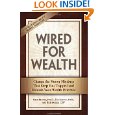
Get Wired For Wealth – The Recession Proof Money Makeover

Wired For Wealth: Change the Money Mindsets That Keep You Trapped and Unleash Your Wealth Potential by Brad Klontz, PSY.D., Ted Klontz, PH.D., & Rick Kahler, CFP.

Wired for Wealth is a book that will make you think hard about your beliefs about money, and it will help you to confront any unhealthy beliefs that are detrimental to your financial goals. The main idea in the book is that we all have money scripts, whether we are aware of them or not, and many of them have been passed down to us from our families.  If left unchecked, these money scripts can create problems and prevent us from reaching our potential.


In order for us to develop positive money scripts, we need to be honest with ourselves about what we really believe about money.

The book is full of real-life stories of people whose money scripts passed down from their families significantly impacted their own behaviors, and ultimately their entire life direction. The interesting thing is that most people are not even aware of their money scripts, but it’s essential to become aware of them in order to promote positive change.

Continue Reading

Book Reviews

Starting Out – Smart Strategies For Your 20s & 30s

Starting Out: Smart Strategies For Your 20s & 30s, Investors Group

I stumbled upon Starting Out while doing a search in my local library database.  It’s a great book full of easy-to-understand information and advice on how to handle your finances from a young age.  The book was put together by Investors Group and I think everyone should read it, even if they are no longer in their 20s and 30s.

The book discusses the basics on everything from figuring out what kind of an investor you are to what an RRSP is and how it is best used.  It provides key ideas that if followed would promote your financial success.  It provides advice on managing debt, building a credit rating, how to choose appropriate bank accounts, and much more.

If you want to learn more about the different investment options available and how they work, you will find this book very informative.  As well, it discusses the different types of risk associated with different investment types.  Out of all the books I have read to date about investing, this book is by far the easiest to comprehend.

Although the book is fairly short (about 120 pages), it covers a lot of important material that would be helpful for anyone who isn’t already financially savvy.  I highly recommend that you check to see if your local library has this book available.  It is well worth the read as it will help you to achieve financial freedom if you are willing to follow the advice and strategies discussed.

Investing

Should I Contribute to an RRSP or a TFSA?


With the introduction of the Tax Free Savings Account (TFSA) in January 2009, Canadians now have another investment vehicle option to save for retirement.  Whereas before, most people took advantage of the immediate tax deduction for contributing into a Registered Retirement Savings Plan (RRSP), now they have to consider what will be most beneficial to them in the long run.   With the RRSP contribution deadline for 2009 fast approaching, it’s important for Canadians to make this decision ASAP.

What are the advantages of contributing to a TFSA?

Although you don’t receive an income tax deduction for contributing into a TFSA, there are some important advantages to consider.  All earnings within a TFSA are not taxable, whereas with an RRSP, earnings are tax deferred, but when funds are withdrawn, they are fully taxable.

A second advantage is that there are no expensive tax implications when you withdraw from a TFSA.  Since you’ve already paid tax on the money you contribute to a TFSA, when you withdraw the funds it is not a taxable event.  By contrast, if you withdraw from an RRSP, not only are you subject to an immediate withholding tax, you also have to add the amount withdrawn to your income for the year and you may end up paying more tax when it is time to fill out your tax forms or prepare your online taxes this year.

Continue Reading