Investing

Read The Free Chapter From Multiple Streams of Income

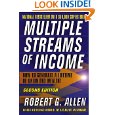
read Multiple Streams of Income by Robert G. AllenI’ve just started reading Multiple Streams of Income by Robert G. Allen.  So far I am really enjoying it.  The first chapter is all about the importance of consistently saving.  He talks about how one dollar can be used to start growing a money tree and the author includes many charts indicating potential growth over the long term.

His main point is that anyone can become a millionaire if they are disciplined enough to save and invest wisely.  Like I emphasized in my last post about investing when you’re young, you don’t have to have a lot of money to start investing.  The best time is to start now.

Instead of me writing a lot about this chapter, I would recommend that you check out this link: http://multiplestreamsofincome.com/ and read the chapter for free online.  To get to the free chapter, click on Keyword Search on the left hand side of the site.  From the drop down menu, select Free Chapter and click the Go button.  I bet you will never think of investing the same way again!  The author emphasizes in a very practical and profound way just how important it is to save for tomorrow today.

Investing

Start Investing When You’re Young

start investing when you're youngThis is written especially for those of you who have just finished high school or university.  I highly recommend that you start to tuck some money away for your future.  Whether you want to save up for your first home, a trip around the world, or for retirement, the time to start saving is now.  I know it’s hard to be thinking about retirement when you’re so young, but believe me, time goes by really fast and before you know it, you will be thinking about your retirement plans.

If you’re like me, you ignored this advice and didn’t start saving until your mid 20s.  Although it’s better than nothing, it’s ideal if you start paying yourself first when you’re young.  I emphasize this because your investments’ growth potential increases dramatically the longer you keep your funds invested.

For example, if you invest $10,000.00 when you’re 18 years old and don’t touch it until you are 65, assuming an average rate of return of 7%, the value of your investment will be around $240,000.  By contrast, if you invest the same amount at age 25, assuming the same rate of return, the value at age 65 will be approximately $150,000.  So, by investing 7 years earlier, the end result is about $90,000 extra dollars in your pocket at retirement.

Although it may seem difficult or even impossible to start saving for retirement at such a young age, I can guarantee that it is worth it and you won’t regret it.  Many financial institutions will allow you to start investing with a minimal amount of money and then you can continuously build up your accounts by setting up preauthorized payments that are within your budget.

You don’t have to have a lot of money to start investing.  Don’t put it off until you are older.  It’s time to start investing today as the more time you spend in the market, the more growth you will see and the more likely you will be able to achieve your goals.

Budgeting

Take the Anxiety Out of Domestic Finances with Microsoft Excel

use Microsoft Excel to keep track of your household budgetLooking after domestic finances can cause much anxiety. Often you are anxious because you find it difficult to keep track of your finances and so do not feel you are in control. Using Microsoft Excel to record, monitor and control your domestic finances can go a long way to removing this anxiety. Some effort is required at the beginning to set up the systems but this is soon rewarded by providing you with a great time and labour saving device, which can also help you save money and stay in control of your finances. If you require Excel training in denver, or any other location, you can find some excellent resources online to get you started.

Home Maintenance

It can be very difficult to keep track of the maintenance requirements in the home, who can remember exactly when the boiler was last serviced for example. Microsoft Excel has the facilities to allow you to produce a home maintenance schedule to make keeping track of maintenance issues much easier. Each item that requires inspection can be listed, together with a schedule of how often they require checking. Simple functions are available in Excel to allow items that are overdue to be flagged for attention, for example by changing the colour to red if the inspection date has been missed. It is also very simple to add notes recording what the issues where the last time the item was inspected. The cost of any work done can also be recorded, which will help to highlight when it would be more economic to replace items rather than continue to repair them.

Household Budget

Keeping track of the household finances can be a daunting task. As well as the basic calculation functions, Microsoft Excel contains simple formulas, which will automatically update the results of your calculations when values change. Revising a value once the total has been calculated is simple, just make the change and Excel updates the total for you. There are also simple functions to allow you to add values, calculate averages and find the smallest or largest values in a range of values. You can use these functions to develop spreadsheets to keep track of all your incoming and outgoing payments, putting in predicted values of bills for budgeting purposes that can then be easily updated when the actual bill arrives. This allows you to keep track of your balance and helps you identify when there is likely to be a shortfall, giving you time to put measures in place to prevent charges being incurred.

Tax Returns

Filling in your tax return can be a long and drawn out business. Even if you send your return off to be completed by someone else you can make things significantly easier by keeping track of expenses during the year. Having a household budget spreadsheet at your fingertips makes it much simpler to record expenses and document the corresponding receipts, which you need to have to hand at tax return time.

Home Improvements

You can also use Microsoft Excel to help in planning and monitoring any home improvements. The first, and ultimately most important point to consider when starting such a venture is how much it is going to cost you. An Excel spreadsheet is a great tool for tracking expenses. You can use the spreadsheet to help you plan the works, develop a preliminary budget, record your actual expenses and compare them to each other. In this way if things are starting to go over budget you should be able to spot it early and use the spreadsheet to review your options to get it back on track.

The above points illustrate just a few of the many ways in which Microsoft Excel can be used to simplify many domestic finance tasks. By applying some or all of these measures you should feel more in control of the situation. You should also be able to save both time and money in completing your household duties, leaving you more time and money for the more enjoyable things in life!

About the Author

Author is a trainer with a Microsoft Office Training company, the UK industry leader in its sector. For more information on Microsoft Office Training, please visit stl it courses.

Budgeting

Set Short-Term, Medium-Term, And Long-Term Goals

set goals for the short, medium, and long termEvery one should have goals. If you don’t have goals, it’s a good idea to make some because when you set goals, you have something to measure your achievements against.  Although most of us do have goals, we don’t all set up goals for the short, medium, and long term.  We may only set short-term goals or perhaps we might just think about our retirement.

A short-term goal might involve saving for a much-needed vacation within the next year or perhaps saving up to buy a vehicle.  A medium-term goal could be to save money for a down payment on a home, and a long-term goal could be to save for retirement or for your child’s education.  By setting goals for different timeframes, you are more likely to achieve your dreams by following a disciplined approach.

Short-term goals such as saving for a vacation could be as simple as putting money into a locked-in account such as a GIC or investing in something like a Money Market or T-Bill.  This way your capital is secure and you can still see some growth in your investment.

A medium-term goal such as saving up to buy your first home could be achieved by setting up an RRSP and taking advantage of the Home Buyer’s Plan.  You could set up preauthorized payments into the RRSP on the same day you get paid and over time your money will grow.

An example of a long-term goal would be a couple who just had their first child  They decide that it is important to them to fund their child’s future post secondary education.  They set up an RESP (Registered Education Savings Plan for Canadians) and begin to contribute to it monthly.  By doing so, they have time on their side and their funds have the time to grow enough to adequately provide the funding for their child’s education.  Had this couple not had the foresight to set up the RESP right away, they would have had to come up with a lot more cash to help out their child.

Planning ahead and disciplining yourself to put money aside each month to contribute to funding your short, medium, and long-term goals is well worth it.  Although you might feel that you are on a tight budget, you can take comfort in knowing that you are paying yourself first, and that your scrimping and saving will pay off as you achieve more and more of your goals.

Credit Cards

Is It Better To Use Cash Or A Credit Card?

is it better to use cash or credit card to make purchases?Cash or Credit Card?  The decision is really up to you.  I’ve outlined just a few of the pros and cons of using cash versus a credit card to shop.  I personally prefer to use a credit card, but I wouldn’t recommend using a credit card unless you know you can pay off the balance every month.

Pros to Using Cash:

*Both methods are not subject to per-transaction fees, however some companies reward customers for using cash by giving them a discount or benefit as it costs the company less to process a cash transaction than a credit card transaction.

*If the networks are down or if the power has gone out, stores can still process cash transactions.

*Carrying cash is also handy for those rare stores/restaurants that don’t accept credit or debit transactions.

*Some people become more conscious about how much they are spending when they use cash.  If using cash makes you more frugal, then that’s definitely something to take into account.

Cons to Using Cash:

*Money is quite dirty.  It’s been touched by a multitude of hands.  You want to make sure you wash your hands after handling money.

*Money can get really heavy if you end up with a lot of change.

*Cash transactions generally take more time to process than credit card transactions.

*With the exception of a few stores that give benefits to those using cash, there generally isn’t any incentive to make cash transactions (i.e. no rewards points).

Pros to Using Credit Cards:

*Transactions are usually processed quickly and credit cards are accepted almost everywhere.

*You don’t have to pay for your transactions until the due date, so it can buy you some time to get the funds if you don’t already have the funds available.

*You can earn benefits/rewards for using your credit card.

*Many credit cards also have insurances and other discounts and benefits attached to them that you could take advantage of,

Cons to Using Credit Cards:

* You pay a significant amount of interest if you don’t pay off your balance each month.  Most credit cards charge 19% interest or higher.

* It creates an extra bill for you to pay each month.

* For some people, using a credit card causes them to spend more money than if they use cash to make purchases.

It’s really up to you whether you choose to use cash or credit to make purchases.  You know your spending habits better than anyone else, so you need to decide for yourself what works for you.  Neither one is really any better than the other, but if one method helps you to be more disciplined when it comes to spending and saving money, then by all means, use that method.