
Money Saving Tips

Ways To Make Food Go Further

Whether you are following a tight food budget or just want to cut down on your meat consumption, below are some simple ways to do both.

save money by making your food go further *Add some rolled oats and an egg to raw ground beef and mix it all together.  Then, cook as normal.  The meat tastes the same and it goes a lot further.  This works great for meatballs and hamburgers.

*Cook with lentils and smaller portions of meat rather than using large meat portions.  Lentils are inexpensive, healthy, and contain lots of protein.

*Roast a chicken and eat it for more than one meal.  The roasted chicken could be for supper.  Then, remove the left over chicken from the bones and use it for sandwiches, quesadillas, salads, or chicken potpie.  (There are a lot of ways to use left over chicken!)  Then, boil the bone to make a delicious soup broth.

*Add rice when cooking meat loaf. It tastes great and you won’t need to use as much meat.  Grated carrots also work well in meatloaf.

*Rather than serving whole steaks, dice them up and stir fry with veggies.  The meat will go a lot further and served with rice or needles, stir fries make for a delicious meal.

*When making chili, add a can of corn and a few cans of different kinds of beans.  It will make a lovely, thick dish without adding a lot of meat.

*Buy a turkey around Christmas or Thanksgiving when they are extremely inexpensive.  Ask to have the turkey cut into halves or quarters and then freeze them.  If you decide to cook the whole turkey, freeze leftovers and use them in salads and for sandwiches, etc.  Boil the carcass to make turkey soup.
Household

Buy Energy Efficient Appliances

If your old appliances need to be replaced or you are moving into a new home and need to startbuy energy efficient appliances from scratch, consider the following tips before going on your shopping spree.  By following these tips you will save a lot of money and make your home “green”.

1. Consider buying a convection oven.  They are more energy efficient because the internal fan decreases cooking time.

2.  Buy a front-loading clothes washing machine.  They use less electricity and water than top loading machines and they more adequately spin your clothes, resulting in less drying time.  You also won’t need to use as much detergent for front-loading machines.  Whether or not you end up buying a front-loading or a traditional top-loading washing machine, make sure it has the option for a small, medium, and large load so you don’t waste water and energy if you happen to wash a smaller load.

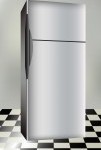
3.  When purchasing a refrigerator, compare the Energy Star labels to ensure you are buying the most energy efficient model.  Avoid features that will waste energy such as ice and water dispensers.  Fridges with top freezers use less energy than side by side freezers.

4.  Buy a clothes dryer that has a moisture sensor option.  That way your dryer will stop automatically when it senses the clothes are dry rather than setting it on a timer and wasting energy.

5.  Choose an energy efficient dishwasher with the Energy Star label.  Anytime you see Energy Star you know it’s at least 15% more efficient than other similar models.  Look for models with a no –heat drying option and soil sensors.   Some also include other eco-friendly features.

Book Reviews

Thrifty Fixes – Home Decorating Ideas That Will Fit Your Budget

Thrifty Fixes for The Home - home decorating on a budgetThe Little Book of Thrifty Fixes For The Home by Bridget Bodoano

Thrifty Fixes is a really neat book. It takes about an hour to read the whole thing and it is jam- packed full of interesting tips on how to decorate your home without spending a lot of money.  Especially right now when people are living on tight budgets, it’s a must-read for anyone looking for a reference book on home decorating.

The thing I like the most about this book is that it gives you practical advice on how to use what you already have around the house rather than encouraging you to go out and buy more!  The theme is to do more with less and to not discount old furniture, lamps, etc, but to improve them instead.  The author also provides tips on how to get the most for your money when you do purchase things for your home.

The author provides tips on everything from flooring to walls to storage.  She discusses ways to make your room look larger and many other interesting topics.  I liked the way she wrapped everything up by talking about ways to ensure your home is energy efficient and environmentally friendly.

Here are just a few tips found in the book:

1.  Smarten up your bathroom simply by buying matching towels.  They can be purchased at large supermarkets and they don’t have to be expensive.

2.  Economy furniture is often made of less material and can look skimpy, so when purchasing furniture, be sure to choose “robust and chunky” over thin and skimpy.

3.  Don’t always buy the cheapest products as although it may solve current budget deficiencies, it could turn out to be a false economy.  For instance, if you buy a sofa, consider its durability and how long you would like it to last.

4.  Fashions come and go, so buy the classics that will outlast the fads.

5.  Don’t worry if all of your pictures don’t match.  Using a single style of frame will unify a mix of prints, paintings, and photographs.

Credit Cards

How to Make a Rewards Credit Card Reward You, Not the Company

A rewards credit card can very often represent excellent value and present real benefits to the consumer. However, it is important not to sign up for a credit card based on the reward alone, and it will be important to take two things into consideration.

The first aspect to consider is whether the card itself represents good value in terms of the available limit, the interest rate charged and any fees, in addition to costs that might be incurred for general maintenance of the account. The second aspect to look at is the reward itself, and whether this represents one which best suits your own personal interests, needs and habits.

Very often, reward credit cards work by providing you with points on your account whenever your credit card is used to purchase goods or services from companies which are either subsidiary ones of the credit card company itself, or part of an affiliate network of finance and retail companies and organizations. One typical example many people come across is a credit card, which offers consumers reward points for purchasing fuel from a particular garage or retailer. With a set number of points per litre or per gallon, these points can be accumulated until a specified number have been reached.

Continue Reading

Household

15 Ways to Conserve Water & Save Money

conserve water and save moneyThere are a lot of ways that we can consciously conserve water around our home and yard.  As a result, we will be paying less for our water bills as well as reducing the amount of water we waste.  Overtime, these behaviors can have a significant positive impact on our environment and our pocketbook.

1.  Take a shower instead of a bath.  A 5-minute shower uses 30 to 40 gallons of water.

2.  Turn off the water while brushing your teeth and shaving.

3.  Collect rainwater to use to water your lawn and garden.

4.  Use a water amplifying shower head so you use less water while taking a shower.

5.  Install a water efficient toilet.  (Flushing comprises about 35% of a household’s total water consumption, so your toilet’s efficiency has a significant impact on your water usage.)

6.  Only run the dishwasher and the clothes washing machine when you have a full load.  When doing laundry, if you do have a smaller load, be sure to change the settings to use less water.

7.  Fix the leaky faucets around your home.  Although one small drop is insignificant, if left unfixed, you will waste 10 gallons of water everyday.

Continue Reading